Granary of culture
Development type: Public utility
Location: Gdansk
Year: 2010
Team: Krzysztof Gąsior
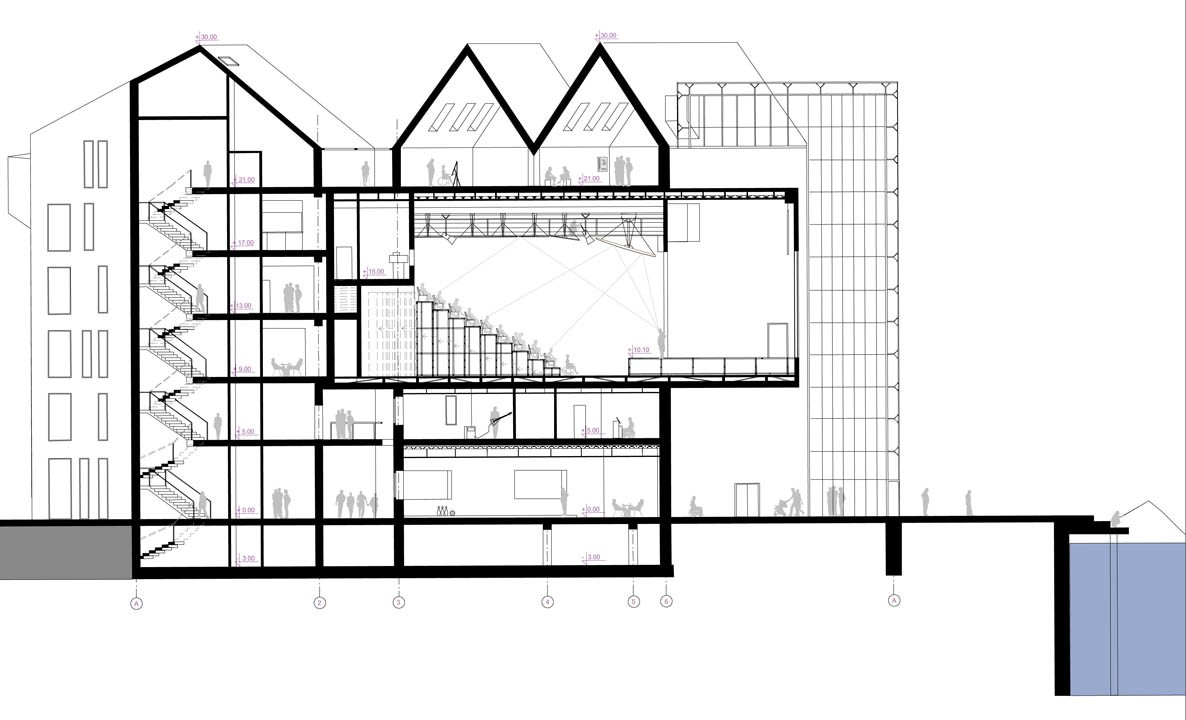
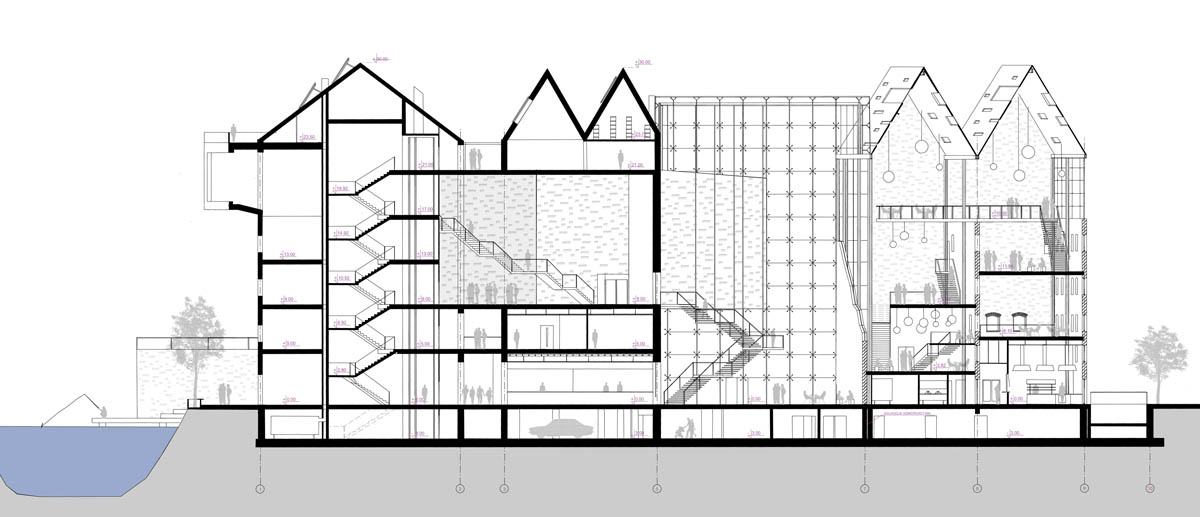
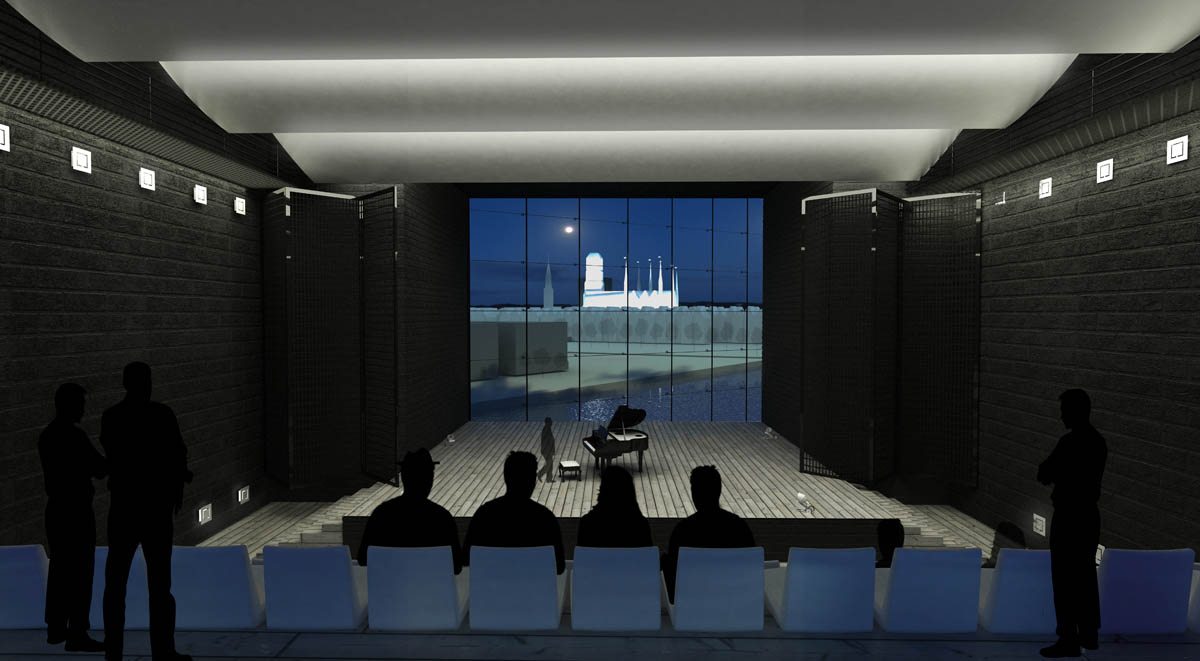
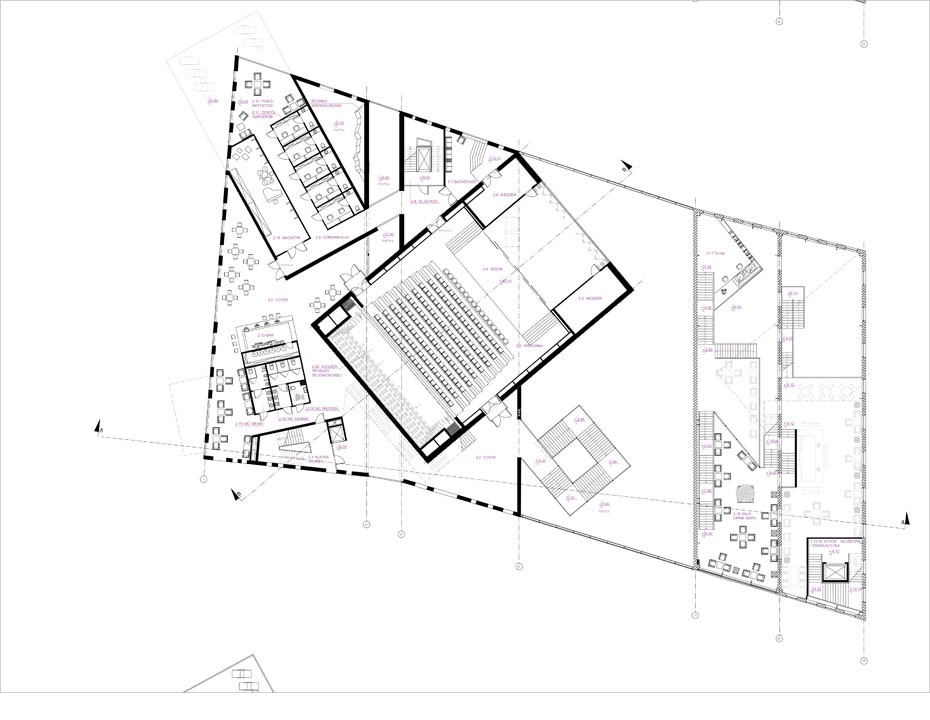
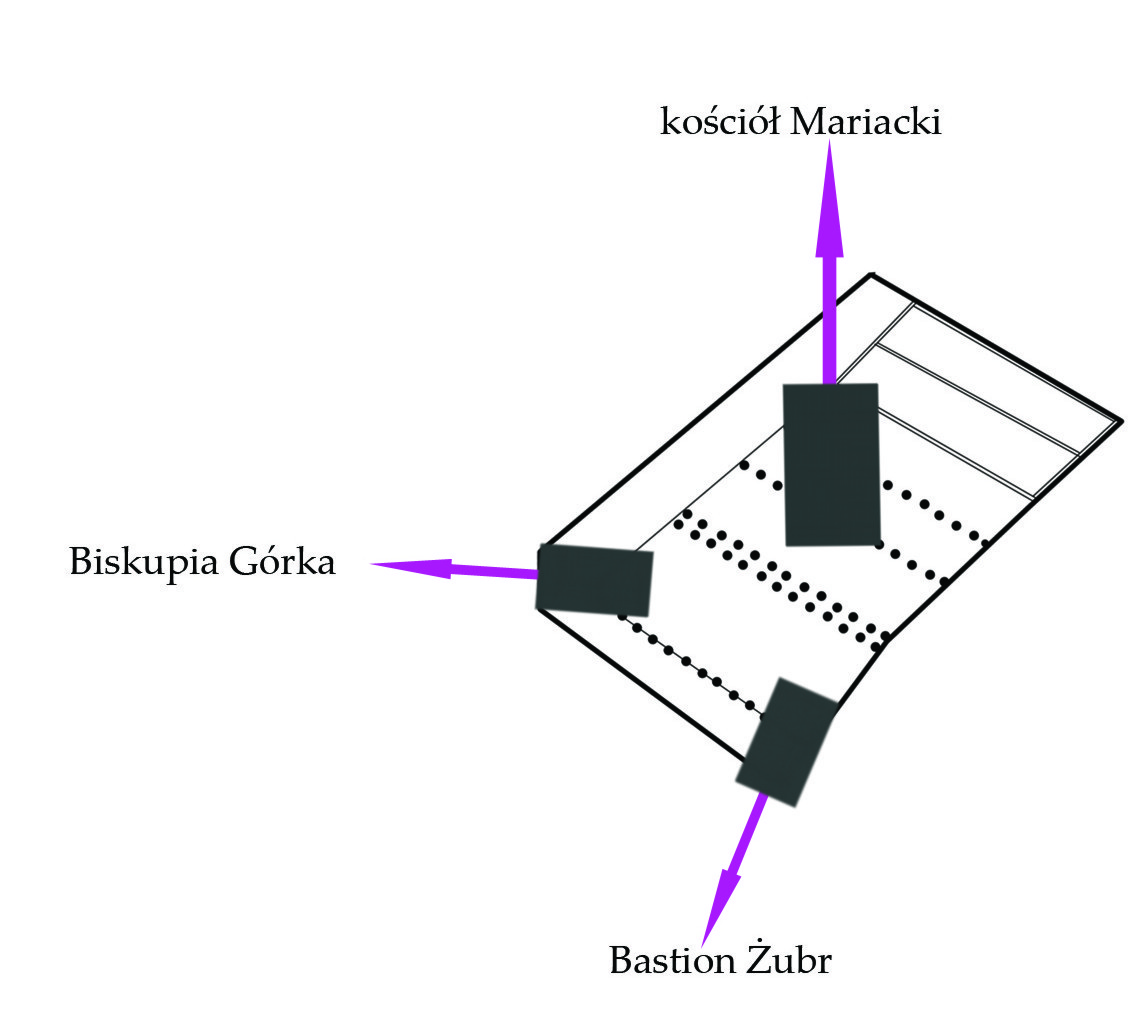
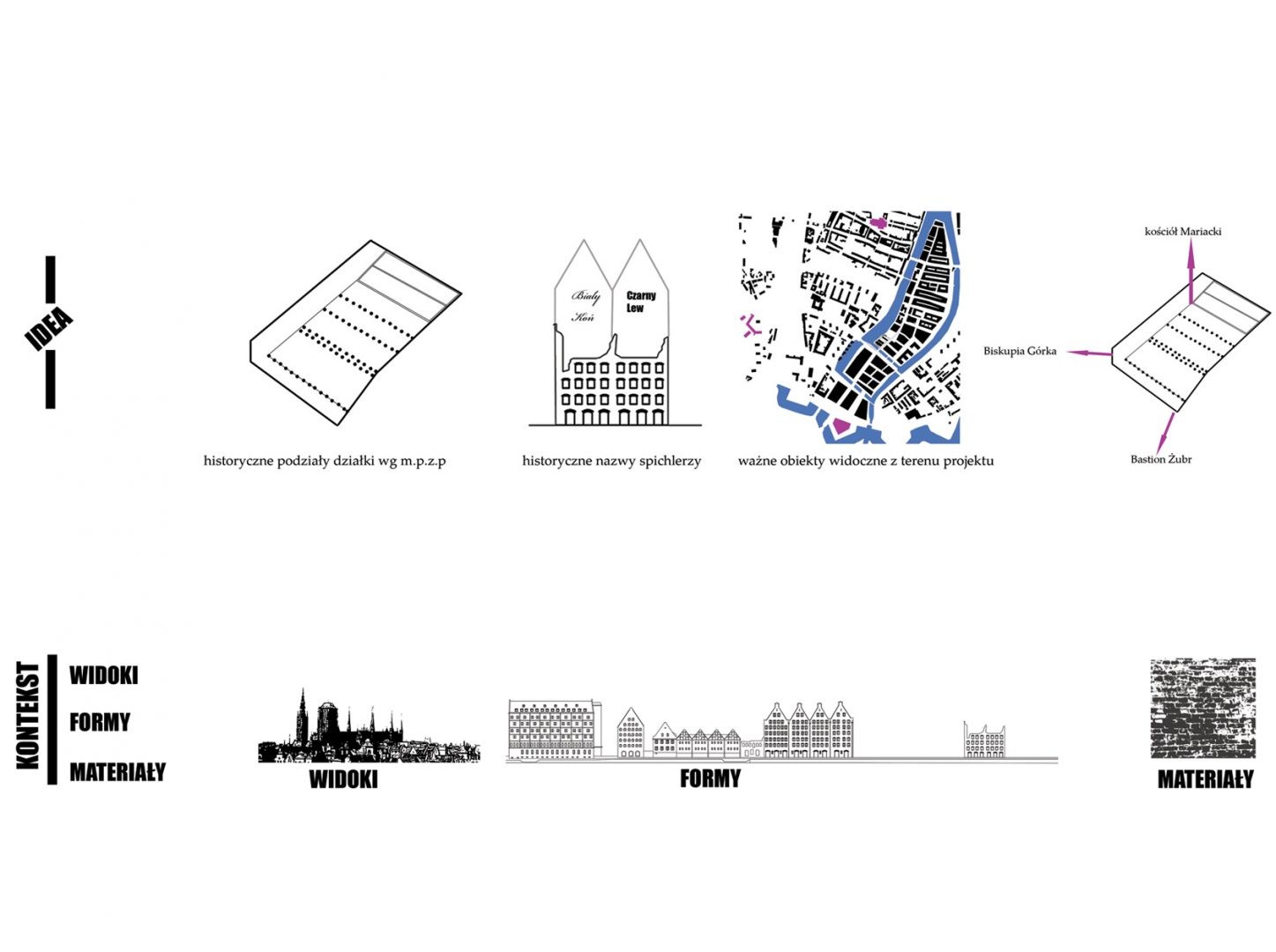
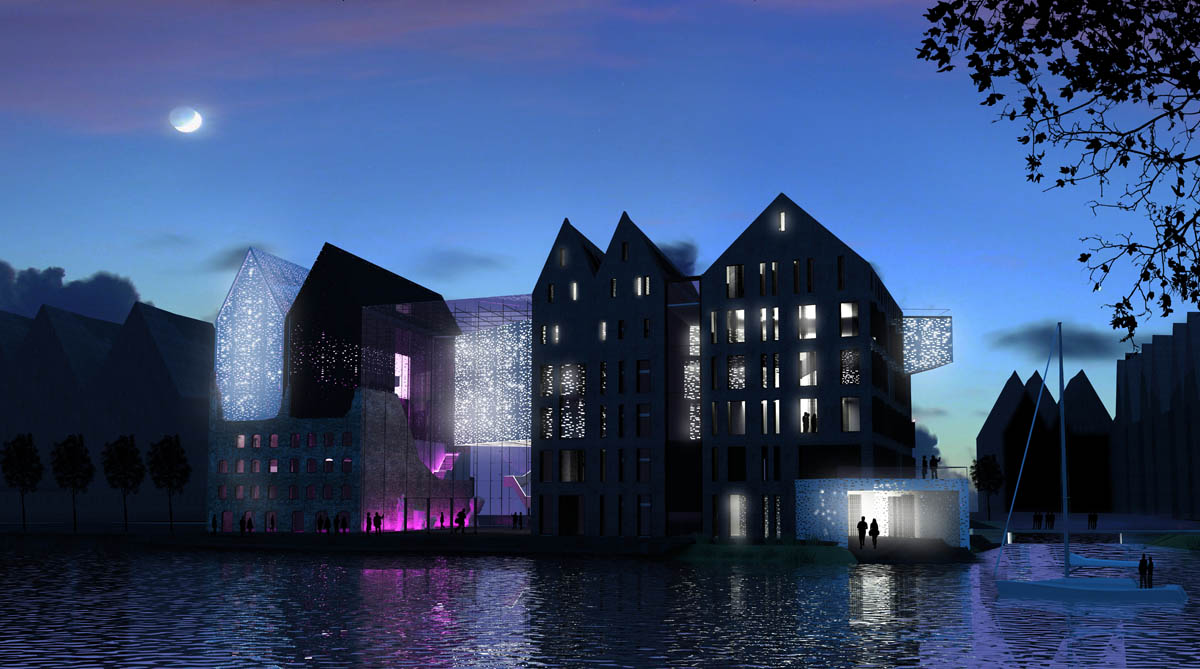
The aim of this work is to draw attention to two issues that are crucial for Gdańsk: – the revitalization of neglected and degraded districts – the approach to designing new buildings within the historic city center The approach to designing new buildings within a historic urban fabric has always been, and probably always will be, a subject of disputes and discussions. I witnessed such a debate during the post-competition exhibition for the northern tip of Granary Island. There, opinions clashed between those with a conservative stance and those with a more “liberal” approach to the historical urban context. The former group wanted to see the granaries rebuilt in their original form—with timber structures filled with bricks or clay, and small windows (as granaries, by their very name, were meant more for storing goods than for habitation). The latter group rightly pointed out that the world has moved on and that in the 21st century, the center of a European city like Gdańsk should feature more representative and contemporary buildings. The discussion, held at the headquarters of the Gdańsk branch of SARP (Association of Polish Architects), did not result in a consensus that would satisfy everyone. I, too, was faced with a dilemma—whether to strictly follow the local spatial development plan (LSDP) for the plot I had chosen and adapt my design to its functional and material guidelines, or to pursue a more experimental approach. I decided that since I had already said “A” by challenging the LSDP from the outset by locating a cultural facility on the site, I would also say “B.” I do not treat my concept as a definitive answer to the issue of new investments in Gdańsk, but rather as a contribution to the ongoing discussion. I believe that my seemingly irreverent approach is, in fact, deeply respectful of the context, history, and identity of the place. It was precisely this context and identity that had a decisive influence on the shape and form of the building. I refer here to the views, forms, and materials found on and around the project site. The project is located in the historic part of Gdańsk, at the intersection of Toruńska and Chmielna streets. The traditional forms of the neighboring brick granaries with gable roofs became a kind of template or "wrapper" for the designed Cultural Granary. Brick is one of the primary materials used throughout Granary Island, so choosing it for the building’s outer shell was a natural decision. The dark graphite color, however, ensures that the “shell” serves merely as a background to what happens inside. Culture and art—i.e., the things “stored” in this granary—extend beyond traditional frameworks, crossing boundaries and limits set by the historical division of the site. The directions in which this “extension” occurs result from urban analysis and key view axes in Gdańsk. The first of these is St. Mary’s Basilica—a masterpiece of Gothic sacred architecture and the largest brick church in the world. The axis of the main multifunctional hall, located on the second floor of the Cultural Granary, aligns precisely with the axis oriented toward the basilica. The hall literally pierces the boundary marked by the historic division of the site and the wall of the granary. This creates a unique experience for the audience—concertgoers, conference participants, or viewers of improvisational theatre—where stage design is reduced to a minimum. Even cinema viewers are not excluded from this view, thanks to a retractable movie screen at the end of screenings. Biskupia Górka, offering panoramic views of Gdańsk, is the highest, though rarely accessible, vantage point in the downtown area. Along with Grodzisko, it is one of the two places from which the city has traditionally been portrayed over the centuries. It marks the second key axis of the project—on the ground floor this axis defines the kayak station, while on upper floors it consistently influences the layout of interior spaces. Bastion Żubr, one of fourteen bastions that fortified Gdańsk between 1622 and 1636, defines the axis along which the small screening room on the fourth floor is located. The final form of the project was also significantly influenced by the remains of two historic granaries located on the plot and under conservation protection. I placed a club-gallery with a restaurant in those ruins. These remnants left their imprint on the modern façade of the Cultural Granary. A graphic interpretation of a fragment of the ruins resulted in a pixelated pattern of perforations on fiber-cement panels used in parts of the building's façade. It’s worth noting that until the 19th century, granaries were not numbered but distinguished by names such as: Crazy World, Herring Barrel, Icelandic Lion, Coat of Arms of Amsterdam, Noah's Ark, Blue Lion, Dancing Bear, White Horse, Black Dog, Grey Goose, Golden Smith, etc. These names began appearing in sources as early as the 15th century. Initially, they were assigned to buildings based on their prominent location (e.g., “Corner”), and later in reference to their external appearance, trade routes, professions, surnames, or nicknames of the owners—eventually becoming identifiers akin to today’s street numbers. By 1688, all 303 existing granaries had their own proper names. These names often changed with ownership, and the owners’ creativity and sense of humor in this regard are often worthy of admiration. If you'd like, I can also format this text for use in an academic paper or portfolio.